TOI-715 b
TOI-715 b Encyclopedic Information
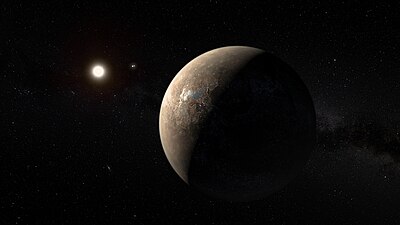
Floating in the cosmic neighborhood of the Volans constellation, TOI-715 b is a tantalizing super-Earth that has sent shockwaves through the exoplanetary community. Located a mere 137 light-years away, this rocky world orbits a dim red dwarf star, putting it squarely in the conservative habitable zone—a celestial sweet spot where liquid water might potentially pool on its surface. While it is about 1.5 times the size of our home planet, the discovery of TOI-715 b represents a massive leap forward in our search for potentially life-sustaining environments beyond our solar system, fueling the philosophical fire of whether we are truly alone in the vast, silent theater of the galaxy.
Related Celestial Bodies
Continue your cosmic journey by exploring other planetary bodies and astronomical wonders.


History & Significance
TOI-715 b was brought into the light by NASA’s Transiting Exoplanet Survey Satellite (TESS), a mission designed to scan the entire sky for the rhythmic dimming of stars caused by passing planets. Its discovery, confirmed by an international team of astronomers, highlights the precision of modern transit photometry. By observing the tiny dip in starlight as the planet crossed its host stars face, scientists were able to calculate its orbital period of just 19 days, a rapid-fire year that makes our 365-day cycle seem like a slow crawl through the void.
While the planet lacks a classical mythological name—being designated by the TESS Object of Interest (TOI) catalog—its existence evokes the ancient fascination with other worlds that occupied the minds of Greek philosophers like Epicurus and Metrodorus. They speculated on the plurality of worlds long before we had the technology to verify them. Today, TOI-715 b stands as a modern testament to that ancient curiosity, bridging the gap between historical speculation and high-tech reality as we sharpen our focus on its atmosphere with the James Webb Space Telescope.
Physical Structure
As a super-Earth, TOI-715 b is likely a dense, rocky world, though its exact composition remains a subject of intense scientific debate. Given its radius, it may possess a thick, silicate-rich crust covering a molten metallic core, much like our own planet, but scaled up in magnitude. Whether it features sprawling, shallow oceans or is a barren, volcanic landscape depends heavily on its atmospheric density. It is trapped in a tight orbit around its M-dwarf star, which suggests it could be tidally locked, with one side forever facing the scorching heat of its sun while the other remains trapped in an eternal, icy night.
The atmosphere of TOI-715 b is its most mysterious feature. If the planet has managed to retain a thick, protective blanket of gases, it could potentially regulate surface temperatures, creating a stable environment for liquid water. However, red dwarfs are notoriously temperamental, often blasting their nearby planets with stellar flares and high-energy radiation. Consequently, the magnetic field of TOI-715 b would be the ultimate gatekeeper of its habitability, acting as an invisible shield against the stellar wind that would otherwise strip away its atmosphere and leave it a sterile, airless rock.
✨ Cosmic Secrets & Fun Facts
- ✦ Discovered in 2023 using the Transit method.
- ✦ Located approximately 42 light-years from Earth.
