TOI-700 d
TOI-700 d Encyclopedic Information
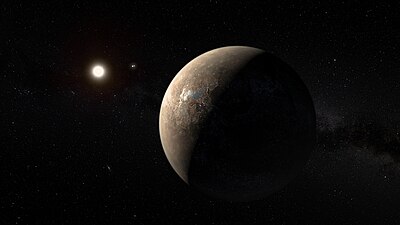
TOI-700 d is a promising answer whispering back to humanitys question, "Are we alone?" originating from the depths of the Milky Way. It is an Earth-sized, presumably rocky exoplanet located approximately 100 light-years away in the constellation Dorado, orbiting the M-dwarf star TOI-700. What makes it so intriguing is its location within what is known as the habitable zone of its star—the theoretical temperature range where liquid water could exist on its surface. This discovery has created great excitement not only in the astronomical community but throughout the world, providing a concrete target in our search for life in the universe. TOI-700 d is one of the brightest candidates for our dream of finding another blue marble in space.
This planet reinforces the idea that the distant lands of science fiction movies and the fantastic worlds of novels could be real. Its existence allows us to question what we know about planet formation and evolution, and to re-evaluate the potential for life around M-dwarf stars. Beyond being merely a celestial body, TOI-700 d represents the intersection of science and philosophy in humanitys quest to understand its place in the universe. One day, gaining more knowledge about this distant world may offer profound insights into our own planet and the miracle of life itself.
The importance of TOI-700 d is not limited to its potential habitability; it also serves as a laboratory for future space telescopes. The existence, composition, and chemical signatures of its atmosphere—especially biosignatures that could point to biological activity—can be studied with powerful tools like the James Webb Space Telescope. While such observations may not provide definitive answers to our questions about the prevalence of life in the universe, they will bring us one step closer to those answers and shape our best estimates of what our cosmic neighbors look like. TOI-700 d is a beacon that inspires us with every step we take into the unknown, keeping our spirit of exploration alive.
Related Celestial Bodies
Continue your cosmic journey by exploring other planetary bodies and astronomical wonders.
History & Significance
The discovery of TOI-700 d is one of the greatest achievements of NASAs Transiting Exoplanet Survey Satellite (TESS) mission. Since its launch in 2018, TESS has been scanning the sky to search for small planets orbiting bright, nearby stars. Its method relies on observing the slight dips in a stars brightness that occur when a planet passes in front of it (a transit). In January 2020, NASA announced the confirmation of three planets in the TOI-700 system: TOI-700 b, c, and d. Among these, TOI-700 d stood out as the first Earth-sized TESS discovery located in its stars habitable zone. This was concrete proof that TESS had successfully fulfilled its scientific goals and highlighted how vital a tool it is in the search for life in space.
The discovery process was not limited to TESS data alone. Scientists also utilized NASAs Spitzer Space Telescope to better understand the habitability potential of TOI-700 d. Spitzers infrared observations confirmed the TESS data, providing more precise information about the planets orbital period and size. This multi-observation and verification process emphasized the rigor and accuracy of scientific discovery. The discovery of TOI-700 d was a major step forward in the search for an Earth-like planet that could potentially harbor liquid water on its surface, and it resonated widely within the astronomy community. The identification of such planets establishes primary targets for future atmospheric characterization studies and helps determine the focus of space missions.
Physical Structure
TOI-700 d is classified as a terrestrial exoplanet, meaning it is primarily composed of rock, much like Earth, Mars, and Venus. Having approximately 1.07 times the radius of Earth and an estimated 1.72 times its mass, it is suggested that this planet possesses a dense, solid internal structure. Scientists hypothesize that, similar to Earth, its interior consists of a dense iron-nickel core, a surrounding silicate mantle, and an outermost solid crust. However, as direct observation is not possible, these details remain speculative and are based on theoretical planetary models. The planets mass and radius indicate that it is not a gas giant or an ice giant; rather, there is a high probability that it has a solid surface.
Precise information regarding the surface conditions and atmosphere of this distant world is not yet available, but there are some strong predictions. Due to its proximity to its star, it is likely that TOI-700 d is tidally locked; this means one side constantly faces its star (eternal day), while the other side remains in perpetual darkness (eternal night). This situation could lead to extreme temperatures on one side of the planet and freezing cold on the other. However, a sufficiently thick atmosphere could redistribute heat around the planet, potentially creating more moderate, habitable conditions along the "terminator line" (the twilight zone) between the day and night regions. The existence and composition of an atmosphere will play a critical role in determining whether liquid water can exist on the planets surface and even whether life could develop. Additionally, the presence of a magnetic field could help protect the planets atmosphere from the harmful effects of stellar winds, though this remains an unknown factor.
✨ Cosmic Secrets & Fun Facts
- ✦ It was the first Earth-sized habitable-zone planet found by TESS.
- ✦ It is likely tidally locked, showing one face to its star at all times.
