Kepler-1649 b
Kepler-1649 b Encyclopedic Information
Kepler-1649 b stands as a tantalizing enigma in the vast tapestry of our galaxy, representing the elusive class of Earth-sized exoplanets orbiting distant stars. Located roughly 300 light-years away in the constellation Cygnus, this terrestrial world offers astronomers a crucial data point in the ongoing quest to understand planetary formation around red dwarf stars. Its existence reminds us that our cosmic neighborhood is likely teeming with rocky spheres, each one a unique laboratory of geological history waiting to be decoded by the next generation of space telescopes.
While Kepler-1649 b itself sits too close to its host star to harbor life as we know it, its significance is profound. It serves as a celestial sibling to its more famous counterpart, Kepler-1649 c, which resides in the habitable zone. By studying the differences between these two worlds, scientists can refine their models of planetary atmospheres and thermal evolution. Philosophically, Kepler-1649 b challenges our perspective, pushing us to look beyond the familiar horizons of our solar system and embrace the reality that the universe is far more crowded—and far more diverse—than our ancestors ever dared to imagine.
Related Celestial Bodies
Continue your cosmic journey by exploring other planetary bodies and astronomical wonders.

History & Significance
The discovery of Kepler-1649 b was a triumph of algorithmic precision and the tireless legacy of NASA’s Kepler Space Telescope. Identified through the transit method—where the planet passes in front of its star, causing a minute dip in brightness—it was officially cataloged after extensive analysis of archival data. Unlike the dramatic headlines that often accompany habitable-zone discoveries, Kepler-1649 b represents the bread and butter of exoplanet science: the painstaking, methodical identification of worlds that provide the statistical backbone for our understanding of the Milky Ways planetary census.
Because this world was discovered in the modern era of space exploration, it lacks the ancient mythological baggage of the planets visible to the naked eye. It bears no name from Greek or Roman gods, but rather the sterile, efficient alphanumeric designation of a cataloged object. However, in the spirit of exploration, one could argue it occupies the role of a silent sentinel in the Cygnus constellation. While it doesnt have a direct mythological link, its discovery continues the human narrative of exploration, mirroring the ancient mariners who charted the stars to find their way home, only now we are charting the stars to find our place among the planets.
Physical Structure
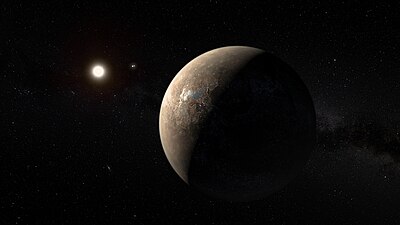
Kepler-1649 b is classified as a terrestrial exoplanet, likely composed primarily of silicate rocks and a dense metallic core. Given its size—roughly 1.08 times the radius of Earth—it is highly probable that the planet possesses a solid, rocky crust scarred by the geological processes inherent to worlds of this scale. Whether it features sprawling volcanic plains or frozen, desolate highlands remains a subject of intense simulation. Because it orbits a red dwarf star, the planet is likely tidally locked, meaning one side perpetually faces its sun in a state of eternal day, while the other remains trapped in an icy, permanent night.
Atmospherically, Kepler-1649 b is a mystery of extreme contrasts. Due to its close proximity to its host star, any potential atmosphere would be subjected to intense stellar wind and radiation, which could have stripped away volatile gases over eons. If a thin atmosphere persists, it might be dominated by carbon dioxide or nitrogen, potentially creating a runaway greenhouse effect that renders the surface an inhospitable, scorching wasteland. Without a robust magnetic field to shield it from stellar flares, the surface of this world is likely a harsh, radiation-drenched environment, offering a vivid look at the extreme conditions that terrestrial planets must endure in the proximity of active M-dwarf stars.
✨ Cosmic Secrets & Fun Facts
- ✦ Discovered in 2017 using the Transit method.
- ✦ Located approximately 92 light-years from Earth.
