HD 40307 g
HD 40307 g Encyclopedic Information
Imagine a world where the horizon stretches farther and the tug of the ground is noticeably more insistent. HD 40307 g is not just another exoplanet; it is a Super-Earth that has captured the imagination of the scientific community since its discovery. Floating approximately 42 light-years away in the constellation Pictor, this celestial body sits in the prestigious Goldilocks Zone—the orbital sweet spot where temperatures are just right for liquid water to exist. It represents one of the most promising candidates for a world that could, theoretically, support an environment similar to our own, though on a much more massive scale.
Beyond its potential for habitability, HD 40307 g serves as a cosmic mirror, forcing us to reflect on the uniqueness of Earth. In a universe teeming with gas giants and scorched rocks, finding a planet in a stable, life-friendly orbit around a sun-like star is a rare victory for astronomers. This world invites us to ponder the philosophical implications of Earth 2.0 and challenges our technology to peer deeper into the void to see if anyone—or anything—might be looking back.
Related Celestial Bodies
Continue your cosmic journey by exploring other planetary bodies and astronomical wonders.


History & Significance
The story of HD 40307 g began in 2012, when an international team of astronomers led by Mikko Tuomi of the University of Hertfordshire re-analyzed data from the HARPS (High Accuracy Radial velocity Planet Searcher) spectrograph. Located at the European Southern Observatory in Chile, HARPS is a planet hunter that detects the subtle gravitational tugs a planet exerts on its host star. While the star HD 40307 was originally thought to host only three planets, Tuomis team used innovative signal-processing techniques to uncover three additional worlds, with g being the outermost and most intriguing of the bunch.
While the planet itself does not carry a name from ancient mythology, its home constellation, Pictor (the Painters Easel), provides a fitting backdrop. Just as an artist uses an easel to support a canvas for creation, the Pictor system serves as a canvas for the laws of physics to paint diverse planetary architectures. Unlike many exoplanets discovered via the transit method (watching a planet pass in front of its star), HD 40307 g was found through the wobble it creates, a testament to the sheer precision of modern spectroscopic missions and a milestone in our quest to map the neighborhood of the Milky Way.
Physical Structure
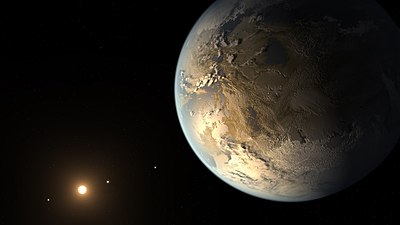
Physically, HD 40307 g is a behemoth compared to our home. With a mass at least seven times that of Earth, it occupies the mysterious middle ground between a rocky terrestrial world and a gas-shrouded mini-Neptune. If it possesses a solid surface, visitors would experience a crushing gravity that would make every movement feel like a heavy-duty workout. This high mass suggests a dense core, likely composed of iron and silicates, which could generate a magnetic field far more powerful than Earths—a vital shield against the radiation of its orange-tinted K-type dwarf star.
The atmosphere of HD 40307 g remains a subject of intense speculation. If it is a rocky world, it could host a thick, insulating atmosphere capable of maintaining stable surface temperatures and potentially supporting vast, high-pressure oceans. However, there is also the possibility that it is a water world or a gas-rich planet with no well-defined surface. Its distance from its star means it receives about 62% of the light Earth does, casting the world in a perpetual, warm twilight. Whether it is a rugged landscape of basaltic plains or a world of swirling mists, HD 40307 g remains one of the most tantalizing destinations for the next generation of space telescopes.
✨ Cosmic Secrets & Fun Facts
- ✦ Discovered in 2013 using the Radial Velocity method.
- ✦ Located approximately 13 light-years from Earth.
