LBV 1806-20
LBV 1806-20 Encyclopedic Information
Deep within the obscured, dust-choked heart of the Milky Way lies LBV 1806-20, a celestial titan that defies conventional stellar expectations. As a Luminous Blue Variable (LBV), this star represents a fleeting, high-octane phase of stellar evolution, burning with a ferocity that pushes the very limits of physics. It serves as a cosmic laboratory for astronomers, offering a rare glimpse into the lives of the universe’s most massive and short-lived stars, which are destined to end their existence in spectacular supernova explosions. Its sheer scale and brilliance remind us that even in the quiet reaches of our galaxy, there are monsters lurking that dwarf our own Sun in ways that challenge our comprehension.
History & Significance
LBV 1806-20 was not identified through traditional optical telescopes; it remained hidden from early astronomers by the thick, impenetrable clouds of interstellar dust located in the direction of the Sagittarius constellation. It wasn't until the advent of advanced infrared astronomy in the early 21st century that researchers could peer through the galactic fog and pinpoint this hidden beacon. Because it lacks ancient mythological roots, its 'history' is one of modern technological triumph, marking a pivotal moment in our mapping of the Milky Way’s most extreme and inaccessible regions. Subsequent observations have sparked intense debate regarding its true mass, as initial estimates once suggested it was among the most massive stars ever discovered, though refined models have since adjusted these figures to reflect its complex, binary-star nature.
Physical Structure
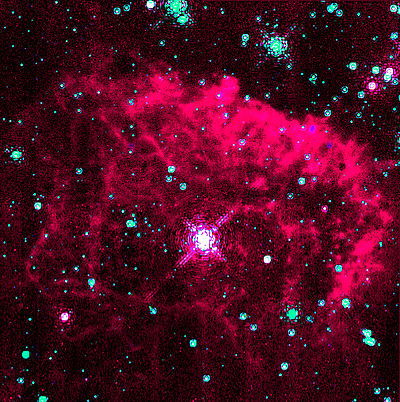
LBV 1806-20 is a volatile powerhouse, characterized by a massive, bloated atmosphere that is constantly being shed into space. This star is not merely a single point of light, but likely a complex binary system, where the interactions between two massive bodies create a chaotic, high-energy environment. The star’s surface is subject to violent eruptions, casting off shells of gas and dust that form a shimmering, irregular nebula around it. Its core operates at extreme pressures and temperatures, fusing hydrogen at a rate so rapid that the star is effectively living on borrowed time, constantly teetering on the brink of gravitational collapse.
✨ Cosmic Secrets & Fun Facts
- ✦ Observations of LBV 1806-20 form a critical component of tracking our galactic structure.
- ✦ A star's color is a direct mathematical indicator of its surface temperature—blue stars are significantly hotter than red stars.
Related Celestial Bodies
Explore other significant celestial entities in the Sagittarius constellation and beyond.

Add StarryDex to your Home Screen
Tap Share, then Add to Home Screen. It opens full screen and works offline.