Sigma Sagittarii
Sigma Sagittarii Encyclopedic Information
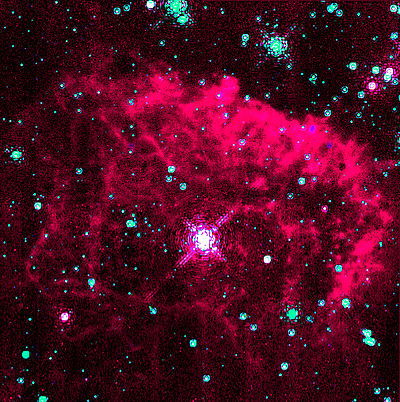
Perched at the top of the 'Teapot' asterism in the constellation Sagittarius, Sigma Sagittarii—better known by its traditional name, Nunki—is a beacon of celestial intrigue. Shining with a piercing blue-white glow, this star serves as a stellar landmark for navigators of the night sky, marking the position of the archer’s bow. Nunki is not just a pretty point of light; it is a massive, energetic star that offers a window into the intense evolutionary cycles of the Milky Way, standing out as one of the brightest and most recognizable stars in the southern celestial hemisphere.
History & Significance
The history of Nunki is as ancient as the civilizations that first gazed upon the stars. Its name is of Babylonian origin, though its exact etymology remains shrouded in the mists of time; some scholars suggest it refers to the 'star of the proclamation of the sea,' linking it to the ancient Eridu region. In Greek mythology, while Sagittarius is often identified as a centaur, Nunki acts as a vital navigational anchor, helping early sailors orient themselves. It has been a constant companion to humanity, serving as a reliable guide for celestial navigation long before modern satellites and GPS systems ever took to the skies.
Physical Structure
Nunki is a B-type main-sequence star, possessing a mass roughly eight times that of our Sun and a surface temperature that leaves our own star looking like a dying ember. Its atmosphere is a roiling, high-energy environment characterized by rapid rotation—spinning at a staggering 200 kilometers per second at its equator. This intense rotational speed causes the star to bulge significantly at the center, an oblate shape that defines its complex physical profile. Unlike the stable, yellow hues of our solar neighborhood, Nunki emits a fierce, ultraviolet-heavy radiation, fueled by the relentless fusion of hydrogen deep within its pressurized, superheated core. It represents a brief but brilliant chapter in stellar evolution, destined to eventually swell into a massive giant before likely ending its life in a spectacular supernova display.
✨ Cosmic Secrets & Fun Facts
- ✦ Sigma Sagittarii resides approximately 70.0 light-years away. The photons capturing your eye today actually left the star 70.0 years ago!
- ✦ Stars are giant cosmic foundries, safely forging the heavy elements that make up planets and organic systems.
Related Celestial Bodies
Explore other significant celestial entities in the Sagittarius constellation and beyond.

Add StarryDex to your Home Screen
Tap Share, then Add to Home Screen. It opens full screen and works offline.